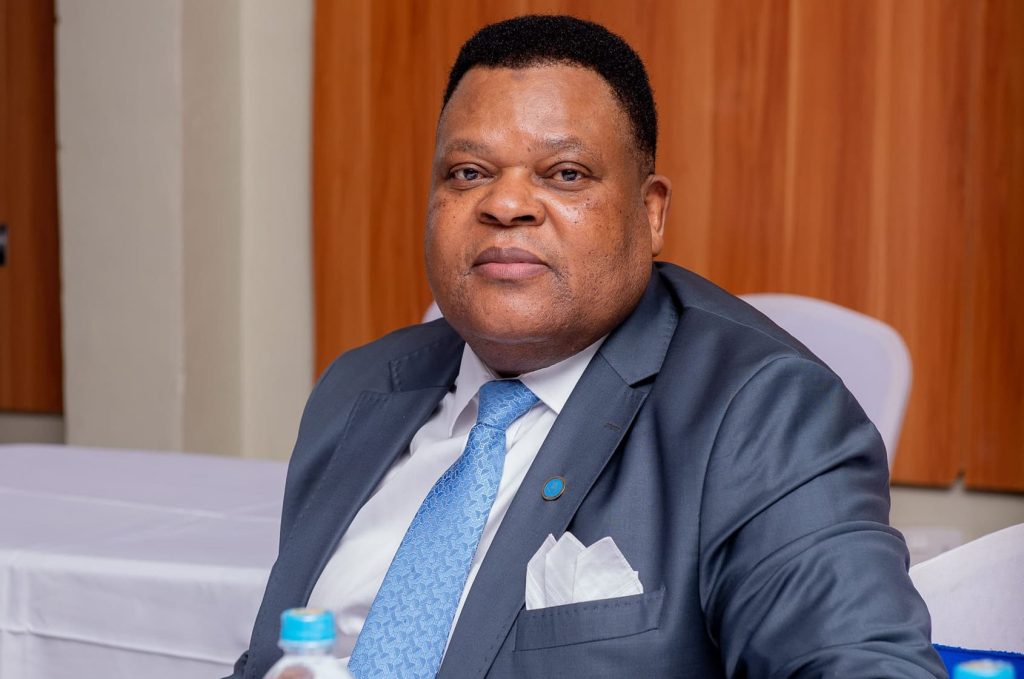
Many people have raised concerns about the conduct of police officers, particularly traffic police officers, and those manning roadblocks, alleging that at some checkpoints officers solicit money from motorists. Our Staff Writer EDWIN NYIRONGO spoke to Minister of Homeland Security PETER MUKHITO on this matter.
What do you make of claims that police officers mount check points to raise money for themselves?
. | Nation
Roadblocks remain an important policing and national security tool. They help prevent and detect crime, intercept criminals, recover stolen property, curb illegal trafficking and enforce traffic laws. They are not revenue collection points or places for corruption. I acknowledge that some citizens have had negative experiences with individual officers. Any police officer who solicits or accepts a bribe violates both the law and the Police Service Code of Conduct. Such behaviour damages the reputation of the many officers who serve professionally and with integrity. I encourage citizens to report officers who demand bribes, but I also urge the public not to initiate or facilitate corruption by offering money.
Why are there so many roadblocks on our roads? Is Malawi becoming a police State?
Malawi is not a police State. Roadblocks are deployed according to security assessments, intelligence reports and operational requirements, not distance. The Mchinji corridor is one of Malawi’s busiest international gateways and faces challenges such as human trafficking, vehicle theft, drug trafficking, smuggling and illegal migration. This requires enhanced security measures. However, I have directed the Malawi Police Service to continue reviewing the placement and effectiveness of roadblocks to ensure they remain intelligence-led and cause minimal disruption to legitimate travellers and businesses.
President Hakainde Hichilema of Zambia raised similar concerns during the opening of the Mchinji-Mwami One-Stop Border Post in 2022. Why do our police not take this matter seriously?
We take all constructive observations seriously, whether they come from our citizens, neighbouring countries or development partners. Government recognises that border efficiency and security must go hand in hand. Our goal is to facilitate trade, tourism and investment while safeguarding national security.
What justifies our traffic police officers’ different lifestyles from their colleagues in other sections?
Lifestyle should never be determined by deployment. Police officers receive salaries and benefits according to government conditions of service, not according to their department. If an officer is suspected of living beyond his or her legitimate means, there are lawful mechanisms to investigate such people. Government will support investigations where credible evidence exists. At the same time, it is important not to generalise because the majority of traffic officers perform their duties honestly and professionally.
There are frequent scenarios of traffic police officers stopping motorists, notably minibus drivers, and what passengers see are ‘hand-shakes’ after which drivers proceed without any checking of their vehicles. Is this normal practice?
No. Standard procedure requires officers to inspect documents such as the driver’s licence, Certificate of Fitness and vehicle registration, where necessary. If an officer bypasses these procedures in exchange for money or favours, that amounts to serious misconduct and possible criminal corruption. Such behaviour will not be tolerated, and I encourage members of the public to report specific incidents with enough details to allow investigations.
Many police officers own minibuses which are allegedly allowed to disregard traffic laws. Isn’t that a conflict of interest?
Police officers, like other public servants, may lawfully own businesses and property as long as they comply with the law and public service regulations. However, no officer is permitted to use their position to gain unfair advantage or immunity from the law. If there is evidence of preferential treatment, investigations will be conducted and disciplinary action taken where necessary.
There are claims that police officers who commit offences are punished by merely transferring them to another duty-station. What sense does this make?
Transfers are administrative decisions, not disciplinary measures. Where an officer commits a misconduct or a criminal offence, the appropriate disciplinary and criminal justice processes should follow. No officer is above the law.
Some officers claim that becoming a traffic officer requires ‘connections’. What is your take on this?
Appointments and deployments within the Malawi Police Service are based on organisational needs, competence and established procedures. If anyone has credible evidence of corruption or favouritism, they should report it through the appropriate channels for investigation.
There is a belief that traffic officers just look for faults on motorists to meet revenue targets given to them, is that fair?
The Malawi Police Service is not mandated to harass motorists or hunt for mistakes. Its role is to enforce the law impartially, promote road safety and protect life and property. Traffic penalties exist to encourage compliance, not to generate revenue.
What is your message to Malawians who seem to have lost trust in police?
Public trust is the foundation of effective policing. Crime cannot be defeated by the police alone; it requires strong partnerships with communities. To those who may have lost confidence because of past experiences, I want to assure them that we are committed to building a police service that is professional, accountable, transparent and responsive. Government remains committed to strengthening professionalism, improving service delivery, combating corruption and ensuring that every police officer understands that the uniform represents honour, integrity and service to the people of Malawi. Together, we can build a safer Malawi founded on the rule of law, mutual trust and shared responsibility.